

BLOG
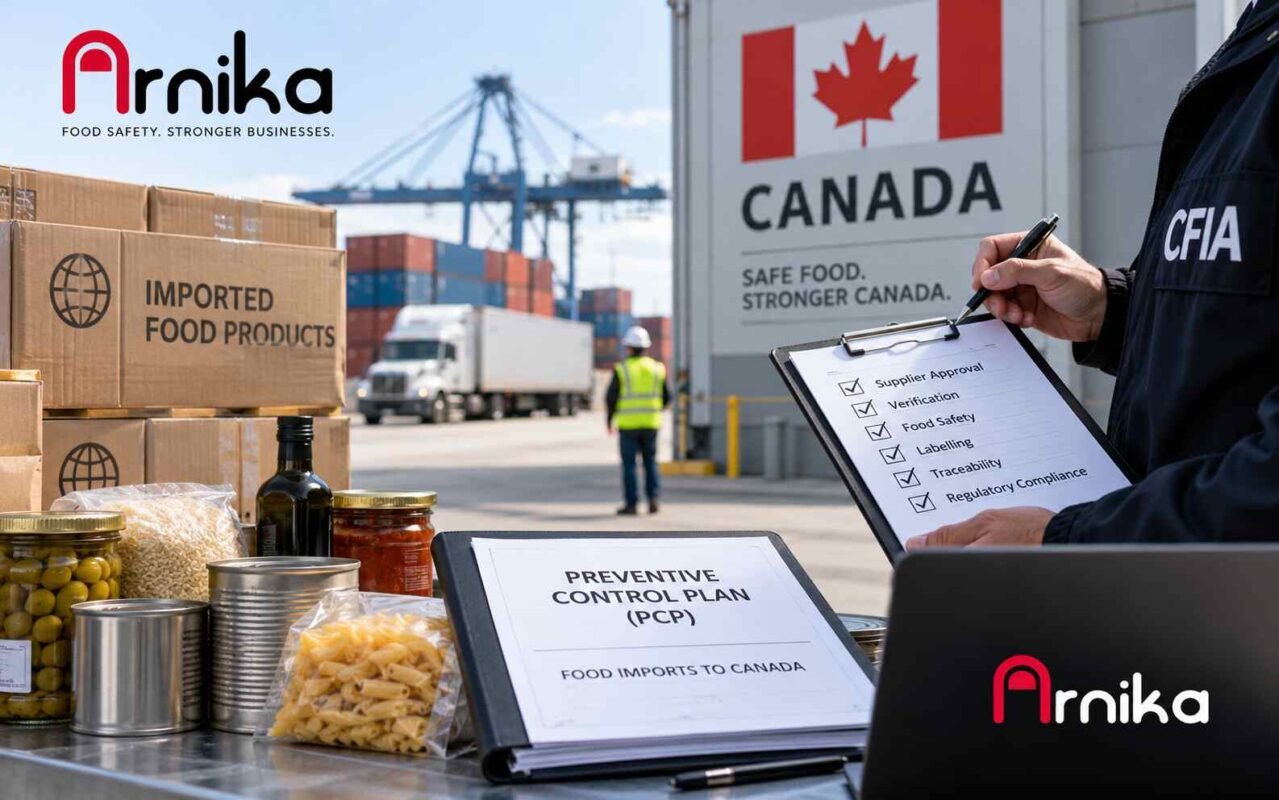
PCP for food importers Canada is an important consideration for businesses bringing food products into Canada. Importing food involves more than purchasing products from a foreign supplier and arranging transportation. Depending on the business activities and applicable requirements, importers may need to address SFCR licensing, preventive controls, foreign supplier controls, traceability, recalls, labelling, packaging and other Canadian requirements.
A Preventive Control Plan (PCP) describes how an applicable food importer addresses food safety and relevant consumer protection requirements for the food it imports.
CFIA provides specific guidance for food importers because an importer may not be physically present at the foreign establishment where food is manufactured, processed, packaged or labelled. The importer therefore needs appropriate information and assurances about the foreign supplier’s food safety controls and appropriate procedures for verifying imported food.
Reviewed by Reza Eslami, CEO & Co-Founder of Arnika, with more than 25 years of experience in food safety, HACCP, GMP, SFCR, regulatory compliance and food safety management systems.
What Is a Preventive Control Plan for a Food Importer?
A A PCP for food importers in Canada is a written plan describing the measures and controls used to help ensure that imported food is safe and meets applicable Canadian requirements.
For importers, the PCP must be tailored to the business, the foods being imported, the foreign suppliers involved and the applicable market and regulatory requirements. CFIA specifically states that generic templates or other approaches may be used as a starting point, but the importer remains responsible for ensuring that the PCP meets the requirements of the Safe Food for Canadians Regulations (SFCR).
A food importer’s PCP may address areas such as:
- Food safety hazards
- Foreign supplier food safety controls
- Verification procedures
- Packaging and labelling
- Consumer protection requirements
- Traceability
- Complaints and recalls
- Supporting documentation
- Corrective actions
- Monitoring and verification records
A PCP is therefore more than a document stored for an inspection. It should reflect how the importer actually manages food safety and compliance in day-to-day operations.
Does a Food Importer Need a Preventive Control Plan in Canada?
The answer depends on the business activities and applicable SFCR requirements.
CFIA provides an interactive tool to help food businesses determine whether they need to prepare a written PCP. For importers subject to the applicable import-licensing requirements, the PCP is part of the import licence requirements and should be developed and implemented before applying for the licence and before importing food.
Importers should not assume that every food business has identical obligations. Requirements can depend on factors such as:
- The food being imported
- The activity being conducted
- Whether the business requires an SFCR licence
- Whether the business also manufactures, packages or labels food in Canada
- The destination or trade context
- Applicable consumer protection requirements
If you are unsure whether your business requires a written PCP, the appropriate starting point is CFIA’s Preventive Control Plan interactive tool and the applicable SFCR guidance.
What Should a Food Importer's PCP Include?
An importer’s PCP should reflect the actual foods, suppliers, import process and controls used by the business.
For importers subject to the written PCP requirements, CFIA’s importer-specific guidance identifies several important components.
1. Hazard Identification and Control Measures
The importer needs to ensure that reasonably expected biological, chemical and physical hazards associated with each type of imported food have been identified and considered.
This includes hazards inherent to the food as well as hazards associated with the foreign supplier’s processes and operations.
Because the importer may not be present at the foreign establishment, the PCP should also describe how the importer obtains appropriate assurances that relevant hazards have been identified and appropriately controlled by the foreign supplier.
Depending on the food and supplier, supporting evidence may include:
- Supplier food safety information
- Product specifications
- Supplier audits
- Third-party audit information
- Certification information
- Laboratory results
- Certificates of Analysis where appropriate
- Supplier questionnaires or assessments
The appropriate evidence depends on the food, hazards, supplier and import business model.
2. Foreign Supplier Controls
This is one of the most important differences between an ordinary PCP discussion and an importer-specific PCP.
A Canadian importer is responsible for obtaining appropriate assurances about the food safety controls used by its foreign suppliers.
CFIA’s guidance explains that the PCP must describe the importer’s assurances that foreign suppliers have appropriate preventive controls and a food safety system consistent with applicable requirements.
A foreign supplier control program may include:
- Supplier approval procedures
- Supplier food safety questionnaires
- Product specifications
- Third-party audit reports
- Certification information
- Supplier audits
- Certificates of Analysis where appropriate
- Verification of corrective actions
- Review of supplier performance
Importers should select verification methods based on the risks associated with the product and supplier.
A supplier having an SQF, BRCGS or FSSC 22000 certificate may provide useful evidence, but a specific certification is not automatically required for every foreign supplier. The importer needs an appropriate method of obtaining assurances that the supplier’s controls are effective.
3. Verification Procedures
A PCP should explain how the importer verifies that the food safety controls and import process are working effectively.
Verification can include activities such as:
- Reviewing supplier documentation
- Reviewing Certificates of Analysis
- Reviewing product specifications
- Sampling and testing
- Shipment inspections
- Reviewing supplier audit results
- Reviewing complaints
- Monitoring supplier performance
CFIA emphasizes that verification procedures should identify what is being verified, when verification occurs, who is responsible and how the activity is documented. The frequency and level of verification should be appropriate to the risks associated with the imported food and supplier.
For example, an importer may establish more frequent verification when beginning a relationship with a new supplier and adjust the approach as reliable supplier history is established.
Important:
A PCP does not mean that every shipment must automatically be laboratory tested.
Testing, Certificates of Analysis and other verification activities should be selected based on the food safety risk and the importer’s verification procedures. CFIA provides examples of these approaches rather than prescribing one identical procedure for every importer.
4. Consumer Protection Requirements
Food importers also need to consider applicable consumer protection requirements.
Depending on the food and activity, this can include:
- Labelling
- Packaging
- Net quantity
- Grades
- Standards of identity
- Other applicable consumer protection requirements
CFIA’s importer PCP guidance specifically identifies consumer protection, packaging and labelling controls as components of the written PCP requirements for applicable import licence holders.
This is especially important for importers because a product that is safe from a microbiological perspective may still have compliance problems related to its Canadian label or other applicable requirements.
5. Traceability, Complaints and Recalls
A food importer should establish appropriate procedures for handling complaints, recalls and traceability.
Traceability records should allow the business to identify where the food came from and, where applicable, where the food was distributed.
CFIA identifies traceability, complaint and recall requirements separately from some of the specific PCP components. These records may be maintained alongside the PCP, but they do not all necessarily have to be physically incorporated into the PCP document itself.
Arnika also provides guidance on food recall management in Canada and food traceability.
6. Evidence That the PCP Has Been Implemented
Developing a PCP is only the beginning.
The importer needs evidence showing that the procedures described in the PCP are actually being implemented.
Depending on the operation, records may include:
- Supplier approval records
- Product specifications
- Receiving records
- Shipment inspection records
- Verification records
- Laboratory results
- Certificates of Analysis
- Corrective action records
- Complaint records
- Traceability records
- Recall records
- Employee training records
CFIA states that importers required to have a written PCP must generate records demonstrating implementation, and documents showing PCP implementation have a two-year retention requirement. Import records must also be clear, readable and accessible in Canada and available to CFIA when requested.
Is a PCP the Same as HACCP?
No.
HACCP and a Preventive Control Plan are related, but they are not the same thing.
HACCP is a systematic approach for identifying and controlling significant food safety hazards.
A PCP is a broader documented framework used to demonstrate how applicable preventive controls and consumer protection requirements are addressed.
HACCP principles can form an important part of the hazard-analysis and control framework within a PCP, but an importer PCP can also address areas such as:
- Foreign supplier controls
- Verification procedures
- Packaging and labelling
- Consumer protection
- Implementation records
- Traceability
- Complaints and recalls
For a broader explanation of HACCP, see Arnika’s HACCP guide.
For prerequisite programs, see Prerequisite Programs for HACCP.
Common PCP Mistakes Made by Food Importers
A generic PCP document may look complete while still failing to reflect the actual import operation.
Common problems include:
Using a Generic PCP Template
CFIA allows businesses to use templates and other approaches, but the information must be tailored to the particular business, foods, foreign suppliers and market requirements.
Not Assessing Foreign Suppliers
An importer may have a supplier specification but no effective method of obtaining assurances about the supplier’s food safety controls.
Having a PCP but No Implementation Records
A written document alone does not demonstrate that the system is being followed.
Treating Certification as a Substitute for Verification
A foreign supplier’s certification can be useful evidence, but the importer still needs appropriate verification procedures based on the applicable risks and requirements.
Ignoring Canadian Labelling Requirements
Imported food may have food safety controls in place at the foreign establishment but still require changes or verification to meet Canadian consumer protection requirements.
No Defined Verification Frequency
The PCP should explain what is verified, who performs the activity and how often verification occurs.
Failing to Update the PCP
Changes to suppliers, ingredients, formulations, packaging, processes, food safety controls or identified problems may require the PCP to be reassessed and updated. CFIA describes an importer’s PCP as a living document that should be maintained and revised when appropriate.
How to Prepare a PCP Before Importing Food Into Canada
A practical approach is to work through the following sequence.
Step 1: Determine Your SFCR and Licensing Requirements
Identify whether your activities require an SFCR licence and a written PCP.
Step 2: Identify the Foods You Will Import
Document products, ingredients, packaging, intended use, suppliers and relevant storage requirements.
Step 3: Identify Food Safety Hazards
Assess biological, chemical and physical hazards associated with the imported food and the foreign supplier’s processes.
Step 4: Assess Your Foreign Suppliers
Determine what evidence and assurances you need from each supplier.
Step 5: Establish Verification Procedures
Define what you will verify, who will perform the verification, how often it will occur and what records will be maintained.
Step 6: Address Consumer Protection Requirements
Review applicable labelling, packaging, grades, standards of identity, net quantity and other requirements.
Step 7: Establish Traceability and Recall Procedures
Make sure the business can trace imported food through the supply chain and respond appropriately to complaints or recalls.
Step 8: Implement the PCP
Train responsible employees, follow the procedures and generate objective records.
Step 9: Maintain and Reassess the PCP
Review the system regularly and update it when suppliers, products, processes, controls or other relevant circumstances change.
What Does CFIA Look for When Reviewing an Importer's PCP?
CFIA does not pre-approve PCPs.
Instead, CFIA verifies whether the business has documented evidence that its controls are effective and meet applicable requirements.
During a Food Safety Inspection or compliance activity, an importer may need to demonstrate that:
- The PCP reflects its actual import activities.
- Relevant hazards have been identified.
- Appropriate supplier controls are in place.
- Verification procedures are defined and implemented.
- Consumer protection requirements are addressed.
- The PCP has actually been implemented.
- Required records are available.
- Corrective actions are taken when problems are identified.
- The PCP is maintained and updated when necessary.
This is why building a PCP only for the purpose of submitting paperwork is usually not enough. The system needs to work in the actual business.
For additional preparation support, see Arnika’s CFIA Inspection Preparation service.
How Arnika Helps Food Importers Develop a PCP
Arnika supports Canadian food importers with practical Preventive Control Plan development and implementation.
Depending on the project, our support may include:
- PCP development
- Hazard analysis
- Foreign supplier control procedures
- Supplier approval systems
- Verification procedures
- Product and supplier risk assessment
- Traceability procedures
- Recall preparedness
- Labelling and consumer-protection review
- Corrective-action procedures
- Recordkeeping systems
- Employee Food Safety training
- CFIA inspection-readiness support
Our approach is to develop the PCP around the actual imported foods, suppliers, hazards, verification activities and business model, rather than providing a generic document.
For broader consulting support, see Food Safety Consulting Services in Canada.
Need Help With a PCP for Importing Food Into Canada?
Importing food successfully requires more than obtaining products from a foreign supplier. Your business needs a practical system for assessing hazards, controlling supplier risks, verifying imported food, maintaining records and responding when something goes wrong.
Arnika helps food importers develop and implement practical PCP systems aligned with applicable SFCR and CFIA requirements.
Need help with your food importer PCP? Contact Arnika’s Food Safety Consulting Team.
Frequently Asked Questions
Do all food importers in Canada need a written PCP?
Not every food business has identical regulatory obligations. Whether a written PCP is required depends on the business activities and applicable SFCR requirements. Importers should use CFIA’s PCP interactive tool and applicable guidance to determine their obligations. For importers subject to the applicable import-licensing requirements, the PCP is part of the licence requirements.
What should a PCP for a food importer include?
For applicable import licence holders, the PCP should address relevant hazards and control measures, foreign supplier food safety controls, verification procedures, consumer protection requirements, evidence of implementation and supporting documentation. Importers also have separate requirements related to records such as traceability, complaints and recalls.
Is a PCP the same as a HACCP plan?
No. HACCP is a systematic approach to identifying and controlling significant food safety hazards. A PCP is a broader framework that can incorporate HACCP principles while also addressing importer-specific areas such as foreign supplier controls, verification, consumer protection and implementation records.
Does my foreign supplier need SQF, BRCGS or FSSC 22000 certification?
Not necessarily. CFIA’s importer guidance describes several possible approaches to obtaining assurances about foreign supplier controls, including third-party assessments, supplier audits and other appropriate evidence. A particular certification may be useful, but it is not automatically required for every imported food or supplier.
Do I need a Certificate of Analysis for every imported shipment?
Not necessarily. Certificates of Analysis can be one component of an importer’s verification activities, but the appropriate verification method and frequency depend on the food, supplier and associated risks. CFIA provides COA review and sampling/testing as examples of verification approaches.
Does CFIA approve PCPs before I start importing?
No. CFIA does not approve PCPs. Businesses are responsible for developing and implementing their PCPs, while CFIA verifies compliance through inspection and other activities.
How long should PCP records be kept?
Documents showing implementation of an importer’s written PCP have a two-year retention requirement. Other records, such as traceability, complaints and recall records, have their own applicable requirements. Records must also be accessible in Canada and available to CFIA when requested.
How often should an importer’s PCP be reviewed?
The PCP should be reassessed at a frequency appropriate to the food business and updated when relevant changes or problems occur, such as a new supplier, formulation or packaging change, complaint, recall, non-compliance or unsatisfactory laboratory result.
Can Arnika develop a PCP for my food importing business?
Yes. Arnika can support PCP development and implementation based on your imported foods, foreign suppliers, hazards, verification procedures, traceability system and applicable regulatory requirements.