

BLOG
Developing a HACCP Plan is one of the most important steps in building an effective food safety management system. Whether you operate a food manufacturing facility, bakery, meat processor, dairy plant, importer, or food distribution business, a properly designed HACCP Plan helps identify food safety hazards, establish preventive controls, and demonstrate regulatory compliance.
Many businesses search online for a HACCP Plan Template hoping to find a document they can complete quickly. While templates provide a useful starting point, every HACCP Plan must be customized to reflect your products, processes, equipment, and operational risks.
In this guide, we’ll explain what a HACCP Plan is, what it should include, and how to create one that supports compliance with Canadian food safety requirements, including the Safe Food for Canadians Regulations (SFCR).
What Does HACCP Stand For?
HACCP stands for Hazard Analysis and Critical Control Points.
It is an internationally recognized food safety management system designed to identify, evaluate, and control biological, chemical, and physical hazards throughout the food production process.
Rather than relying solely on finished product testing, HACCP focuses on preventing hazards before they occur, making it one of the most effective approaches to food safety management.
Today, HACCP principles are widely used by food manufacturers around the world and form the foundation of many certification schemes, including SQF, BRCGS, FSSC 22000, and Preventive Control Plans (PCPs).
What Is a HACCP Plan?
A HACCP Plan is a documented system that identifies potential food safety hazards and explains how those hazards will be controlled during production.
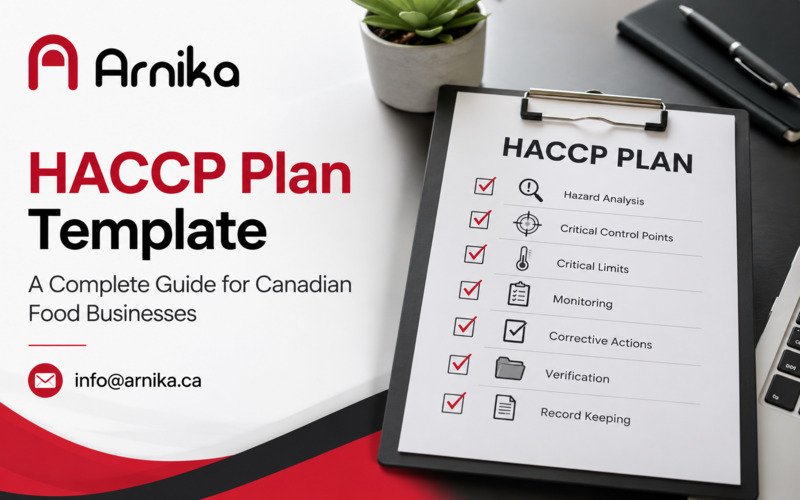
A complete HACCP Plan typically includes:
- Product description
- Intended use
- Process flow diagram
- Hazard analysis
- Critical Control Points (CCPs)
- Critical limits
- Monitoring procedures
- Corrective actions
- Verification activities
- Record keeping
Together, these elements help ensure that food products remain safe throughout manufacturing and distribution and forms the foundation of many Preventive Control Plans (PCPs) required under Canadian regulations.
Who Needs a HACCP Plan?
A HACCP Plan is beneficial for almost every food business, including:
- Food manufacturers
- Food processors
- Meat and poultry facilities
- Dairy processors
- Seafood processors
- Beverage manufacturers
- Bakeries
- Importers
- Exporters
- Food distributors
Even when HACCP certification is not legally required, implementing a HACCP-based food safety system helps businesses improve consistency, reduce risks, and prepare for customer or regulatory audits.
Can I Write My Own HACCP Plan?
Yes—but it requires a thorough understanding of HACCP principles, food safety hazards, and your production processes.
Many businesses begin with a free HACCP template. While templates are helpful, simply copying another company’s plan is not recommended. Every operation has unique products, ingredients, equipment, suppliers, and risks that must be reflected in the final document.
For example, a bakery, a dairy processor, and a seafood manufacturer may all use HACCP, but the hazards and Critical Control Points (CCPs) will differ significantly.
A customized HACCP Plan provides far greater value than a generic template because it accurately represents your facility and supports regulatory and certification requirements.
HACCP Plan Template
A practical HACCP Plan should contain the following sections.
Product Description
Describe the product, ingredients, packaging, storage conditions, shelf life, and intended consumer.
Intended Use
Explain how the product is expected to be handled and consumed, including any vulnerable consumer groups.
Process Flow Diagram
Document every step of the manufacturing process, from receiving raw materials to shipping finished products.
Hazard Analysis
Identify potential:
- Biological hazards
- Chemical hazards
- Physical hazards
Determine whether each hazard requires preventive controls.
Critical Control Points (CCPs)
Identify the process steps where hazards can be prevented, eliminated, or reduced to acceptable levels.
Critical Limits
Establish measurable limits such as:
- Temperature
- Time
- pH
- Water activity
These limits determine whether each CCP remains under control.
Monitoring Procedures
Define:
- What will be monitored
- How monitoring will be performed
- Who is responsible
- How frequently monitoring occurs
Corrective Actions
Document actions to be taken whenever monitoring indicates that a CCP is out of control.
Verification
Verification confirms that the HACCP system is functioning as intended through activities such as internal audits, calibration, record review, and product testing.
Record Keeping
Maintain accurate records to demonstrate that the HACCP Plan is implemented consistently and effectively.
Common Mistakes When Using a HACCP Plan Template
A HACCP template provides a useful starting point, but one of the biggest mistakes businesses make is assuming that a template alone is sufficient.
Common mistakes include:
- Copying another company’s HACCP Plan without customization.
- Incomplete or inaccurate hazard analysis.
- Incorrect identification of Critical Control Points (CCPs).
- Missing monitoring procedures.
- Outdated process flow diagrams.
- Failure to review and update the HACCP Plan after process changes.
- Poor documentation and record keeping.
- Lack of employee training on HACCP procedures.
A HACCP Plan should be reviewed whenever there are significant changes to products, ingredients, equipment, suppliers, or manufacturing processes.
Free HACCP Templates vs. Custom HACCP Plans
Many free HACCP templates available online are designed as general examples. While they can help you understand the structure of a HACCP Plan, they rarely meet the specific needs of your operation.
A custom HACCP Plan considers:
- Your products
- Manufacturing processes
- Equipment
- Facility layout
- Raw materials
- Food safety hazards
- Customer requirements
- Canadian regulatory expectations
A customized plan is more practical, easier to implement, and provides stronger support during customer audits and regulatory inspections.
How Much Does HACCP Cost?
One of the most common questions businesses ask is:
“How much does HACCP cost?”
The answer depends on several factors, including:
- Size of the facility
- Number of products
- Process complexity
- Existing food safety programs
- Staff training requirements
- Whether certification is required
Some businesses only need assistance reviewing their documentation, while others require complete HACCP system development, employee training, internal audits, and certification support.
Rather than focusing only on cost, businesses should consider the value of reducing food safety risks, improving operational efficiency, and preparing successfully for customer and regulatory audits.
How Much Does HACCP Certification Cost?
Certification costs vary depending on:
- Facility size
- Number of employees
- Scope of certification
- Certification body
- Audit duration
Businesses should also budget for:
- HACCP implementation including employee HACCP Training
- Internal audits
- Corrective actions
- Annual surveillance audits
Investing in a strong HACCP system often reduces costly non-conformities during certification audits.
Who Can Issue HACCP Certification?
HACCP certification is issued by accredited third-party certification bodies after a successful audit.
Consultants help businesses develop and implement HACCP systems, but they do not issue certification.
An experienced food safety consultant can help organizations:
- Develop HACCP documentation
- Conduct hazard analysis
- Train employees
- Perform internal audits
- Prepare for Food Safety Certification
- Address non-conformities
This preparation significantly improves the likelihood of successful certification.
What Does a Food Safety Consultant Do?
Food safety consultants work with businesses to strengthen food safety systems and regulatory compliance including preparation for CFIA Inspections.
Typical services include:
- HACCP implementation
- Preventive Control Plan (PCP) development
- GMP assessments
- Internal audits
- Employee training
- CFIA inspection preparation
- Food safety certification support
- Corrective action planning
Working with an experienced consultant helps businesses implement practical systems that are tailored to their operations rather than relying on generic templates.
Why Work with Arnika?
At Arnika, we understand that every food business is different.
Our consultants work closely with manufacturers, processors, importers, distributors, and retailers across Canada to develop practical HACCP systems that support both regulatory compliance and operational excellence.
Our services include:
- HACCP Plan development
- HACCP Plan review
- Preventive Control Plans (PCPs)
- GMP implementation
- Food safety training
- Internal audits
- CFIA inspection readiness
- Food safety certification support
Our goal is not simply to produce documentation—but to help businesses build food safety systems that work every day.
Frequently Asked Questions
What does HACCP stand for?
HACCP stands for Hazard Analysis and Critical Control Points, a preventive system used to identify and control food safety hazards throughout food production.
Can I write my own HACCP Plan?
Yes. Many businesses develop their own HACCP Plans using guidance documents and templates. However, the plan must accurately reflect your products, processes, and food safety hazards. Professional guidance from an experienced Food Safety Consultant can help ensure the plan is practical and audit-ready.
How much does HACCP cost?
The cost varies depending on your facility, products, and level of support required. Factors such as implementation, training, documentation, and certification all influence the overall investment.
How much does HACCP certification cost?
Certification costs depend on the certification body, facility size, audit duration, and the complexity of your food safety system.
Who can issue HACCP certification?
Only accredited third-party certification bodies can issue HACCP certification after successfully completing an audit.
What does a food safety consultant do?
Food safety consultants help businesses implement HACCP, GMP, Preventive Control Plans, employee training, internal audits, certification preparation, and regulatory compliance programs.
Is HACCP mandatory in Canada?
Not all food businesses are legally required to have HACCP certification. However, HACCP principles form the foundation of many food safety systems and are widely recognized as best practice. Many customers and certification schemes also require HACCP-based programs.
What is the difference between a HACCP Plan and a Preventive Control Plan (PCP)?
A HACCP Plan focuses on identifying and controlling food safety hazards through the seven HACCP principles. A Preventive Control Plan (PCP) is required under the Safe Food for Canadians Regulations (SFCR) for certain food businesses and incorporates HACCP principles while also addressing regulatory requirements such as traceability, sanitation, and preventive controls.
Conclusion
A HACCP Plan is much more than a document—it is the foundation of an effective food safety management system. While templates provide a useful framework, every plan should be tailored to your products, processes, and operational risks.
By implementing a well-designed HACCP Plan, businesses can improve food safety, strengthen regulatory compliance and successful CFIA inspections, prepare for certification audits, and build greater confidence among customers and regulatory authorities.
Build a HACCP Plan That Works for Your Business
Whether you’re developing your first HACCP Plan or improving an existing system, Arnika can help.
Our experienced food safety consultants provide practical support with HACCP implementation, Preventive Control Plans (PCPs), GMP, food safety training, internal audits, and certification preparation for food businesses across Canada.
👉 Contact Arnika for
About the Author
Reza Eslami is a Food Safety Consultant with more than 25 years of experience helping Canadian food manufacturers, processors, importers, and distributors implement HACCP, GMP, SFCR, SQF, BRCGS, FSSC 22000, and food safety management systems.