

BLOG
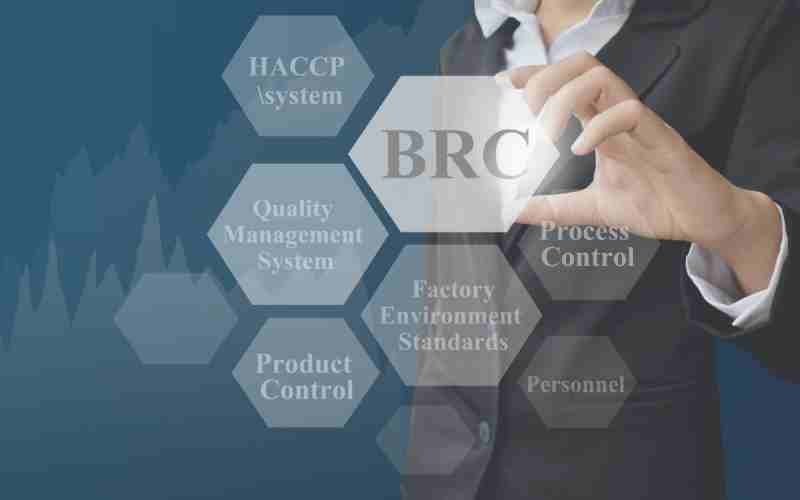
BRCGS certification in Canada is a widely recognized third-party food safety and quality certification for food manufacturers, processors, packers, and other eligible organizations in the food supply chain.
The BRCGS Global Standard Food Safety provides a structured framework for managing food safety, product quality, legality, authenticity, and operational controls.
The standard is GFSI-recognized, making BRCGS relevant to food businesses whose customers, retailers, brand owners, or supply-chain partners require a GFSI-recognized certification programme.
This guide explains what BRCGS certification is, what the standard covers, how the BRCGS certification audit works, and how Canadian food businesses can prepare for certification.
Reviewed by Reza Eslami
CEO & Co-Founder, Arnika
25+ years of experience in food safety, HACCP, SFCR, SQF, GMP, and regulatory compliance.
→ View full profile
What Is BRCGS Certification?
BRCGS stands for Brand Reputation through Compliance Global Standards.
The BRCGS Global Standard Food Safety is a certification standard designed to help food businesses produce safe, authentic, legal products while managing product quality and meeting customer requirements.
The standard covers areas such as:
- Food safety management
- HACCP-based hazard analysis
- Good Manufacturing Practices (GMP)
- Prerequisite programmes
- Product safety and quality
- Traceability
- Supplier management
- Allergen management
- Food safety culture
- Product authenticity
- Internal audits
- Corrective actions
- Site and operational controls
The current BRCGS Global Standard Food Safety is Issue 9. BRCGS states that Issue 9 is the ninth edition of the standard and provides a framework for food manufacturers to produce safe, authentic and legal food while managing quality to meet customer requirements.
Is BRCGS Certification Recognized by GFSI?
Yes.
BRCGS Global Standard Food Safety Issue 9 achieved recognition against the GFSI Benchmarking Requirements v2020. BRCGS has also applied for benchmarking against the updated GFSI Benchmarking Requirements 2024.
An important distinction is that GFSI does not conduct the BRCGS certification audit or issue BRCGS certificates.
BRCGS owns and operates the certification programme, while certification is conducted through an applicable independent certification body and approved auditor.
If you are comparing different GFSI-recognized certification programmes, see our main GFSI Certification Guide.
Why Is BRCGS Certification Important in Canada?
BRCGS certification may be relevant to Canadian food businesses because customers, retailers, brand owners, and supply-chain partners may specify BRCGS or another GFSI-recognized certification programme as a supplier requirement.
Potential reasons for pursuing BRCGS certification include:
- Customer requirements
- Retailer requirements
- Private-label supply
- International supply-chain requirements
- Structured food safety management
- Product safety and quality controls
- Traceability and recall preparedness
- Demonstrating conformity with an internationally recognized standard
BRCGS certification is not a universal legal requirement for Canadian food businesses. Whether certification is necessary depends on the organization’s customers, products, markets, contracts, and supply-chain requirements.
What Does the BRCGS Food Safety Standard Cover?
BRCGS Food Safety evaluates the food safety and quality systems implemented by the site.
Key areas include:
Senior Management Commitment
Management commitment is an important part of maintaining an effective food safety and quality system.
The organization needs appropriate leadership, resources, responsibilities, and objectives to support food safety and product quality.
Food Safety Plan and HACCP
The site must establish an appropriate food safety plan based on HACCP principles.
The system should identify hazards, assess risks, establish appropriate controls, and verify that the controls are effective.
Arnika can help businesses develop and review HACCP systems before certification.
Food Safety and Quality Management System
The site needs documented systems and procedures covering relevant food safety and quality activities.
This can include:
- Document control
- Record management
- Internal audits
- Corrective actions
- Supplier approval
- Traceability
- Incident management
- Complaint management
Site Standards
The physical site and facilities are an important part of BRCGS certification.
Controls may cover:
- Facility condition
- Layout
- Cleaning
- Hygiene
- Maintenance
- Pest management
- Waste management
- Utilities
- Storage
Product Control
BRCGS also addresses controls associated with products and processes.
Depending on the operation, this can include:
- Product specifications
- Product testing
- Allergen management
- Product authenticity
- Packaging
- Labelling
- Product release
Process Control
The organization must establish appropriate controls for its production processes.
These controls should be implemented consistently and supported by appropriate monitoring and records.
Personnel
Personnel practices are also important to food safety.
Relevant controls can include:
- Personal hygiene
- Protective clothing
- Training
- Competency
- Employee practices
- Hygiene facilities
Food Safety Culture
Food safety culture is an important component of the BRCGS standard.
The organization should demonstrate that food safety responsibilities are understood and supported throughout the business.
BRCGS identifies food safety culture as an integral part of GFSI-recognized food safety certification programmes and specifically includes it in Issue 9.
BRCGS Issue 9
The current BRCGS Global Standard Food Safety is Issue 9.
Issue 9 was published in August 2022 and became applicable to audits from February 1, 2023.
BRCGS is currently reviewing and developing the next revision of the Food Safety Standard. In January 2026, BRCGS announced that its public consultation on the revision of Issue 9 had closed.
For organizations currently preparing for certification, it is therefore important to verify the applicable BRCGS requirements and current position statements before the audit.
BRCGS Certification Requirements
The exact requirements applicable to a site depend on its activities, products, processes, and certification scope.
A food business preparing for BRCGS certification should generally have effective systems covering:
- HACCP
- Food safety management
- GMP
- Prerequisite programmes
- Supplier approval
- Traceability
- Allergen management
- Cleaning and sanitation
- Pest management
- Product testing
- Product authenticity
- Internal audits
- Corrective actions
- Employee training
- Food safety culture
- Complaint management
- Incident management
For more information about the foundation of HACCP-based food safety systems, see our GMP and prerequisite programme resources.
BRCGS Certification Process in Canada
Obtaining BRCGS certification involves preparation, implementation, and an independent certification audit.
Step 1 – Determine Your Certification Scope
First, determine:
- Products manufactured
- Processes performed
- Site activities
- Product categories
- Applicable BRCGS requirements
- Activities included within the certification scope
A clearly defined scope is essential before beginning the certification project.
Step 2 – Conduct a BRCGS Gap Assessment
A gap assessment compares the existing food safety and quality system against applicable BRCGS requirements.
The assessment may identify gaps involving:
- HACCP
- GMP
- PRPs
- Documentation
- Records
- Employee training
- Supplier controls
- Traceability
- Sanitation
- Allergen controls
- Internal audits
- Corrective actions
Step 3 – Develop and Implement the System
Once gaps are identified, the organization implements the required corrective actions and system improvements.
This should include both documentation and actual implementation.
Having procedures on paper is not sufficient. The organization needs to demonstrate that the procedures are consistently followed.
Step 4 – Train Employees
Employees should understand the procedures and controls relevant to their responsibilities.
Training can include:
- GMP
- HACCP
- Personal hygiene
- Allergen management
- Cleaning and sanitation
- Food safety culture
- Traceability
- Internal auditing
Arnika provides food safety training for food businesses across Canada.
Step 5 – Conduct Internal Audits
Internal audits help identify problems before the certification audit.
The organization should evaluate whether its food safety and quality systems are implemented effectively and address identified findings through corrective actions.
Step 6 – Conduct a Mock Audit
A mock audit can help the organization understand how prepared it is for the certification audit.
A consultant can review:
- Documentation
- Records
- Facility conditions
- Employee practices
- HACCP
- GMP
- PRPs
- Traceability
- Corrective actions
Step 7 – Select a Certification Body
The BRCGS certification audit is performed by an applicable independent certification body using an approved auditor.
The certification body assesses the site against the applicable BRCGS requirements.
Step 8 – Complete the Certification Audit
During the audit, the auditor may review:
- Documentation
- Records
- Facility conditions
- Production activities
- Employee practices
- HACCP implementation
- GMP controls
- Traceability
- Product controls
- Management systems
Step 9 – Address Non-Conformities
If non-conformities are identified, the organization must address them according to the applicable BRCGS certification requirements.
The certification body evaluates the findings and corrective actions as part of the certification process.
Step 10 – Certification Decision
The applicable certification body makes the certification decision based on the audit findings and applicable BRCGS requirements.
Certified sites can be listed through the relevant BRCGS certification directory.
BRCGS Audit Preparation Checklist
Before a BRCGS certification audit, businesses should review their food safety and quality systems.
Important areas include:
- HACCP plan
- GMP
- Prerequisite programmes
- Cleaning and sanitation
- Pest control
- Supplier approval
- Traceability
- Recall procedures
- Allergen management
- Product specifications
- Employee training
- Internal audits
- Corrective actions
- Complaint management
- Product testing
- Food safety culture
- Site standards
- Management review
A structured food safety audit or mock audit can help identify gaps before the certification audit.
BRCGS Certification in Canada: Regulatory Compliance
BRCGS certification does not replace Canadian food laws and regulations.
A Canadian food business must continue to meet all applicable federal, provincial, and local requirements.
For federally regulated food businesses, this can include applicable requirements under the Safe Food for Canadians Regulations (SFCR).
A BRCGS system can complement a company’s regulatory food safety programme, but certification should not be treated as a substitute for legal compliance.
For Canadian businesses that require a Preventive Control Plan, see the CFIA Preventive Control Plan information.
BRCGS Certification Support Across Canada
Arnika provides BRCGS certification-readiness consulting to food businesses across Canada.
Our services can include:
- BRCGS gap assessments
- HACCP review
- GMP assessment
- Prerequisite programme assessment
- Documentation development
- Employee training
- Mock audits
- Internal audit support
- Corrective-action support
- Certification-readiness consulting
Arnika can support businesses in Montreal, Toronto, Vancouver, Calgary, Edmonton, Ottawa, and other Canadian locations depending on project requirements.
How Arnika Helps With BRCGS Certification Preparation
Arnika can help your business:
Assess Your Current System
We identify gaps between your existing food safety system and applicable BRCGS requirements.
Strengthen HACCP and GMP
We review HACCP, GMP, and prerequisite programmes to help ensure they are appropriately implemented.
Develop Documentation
We can help develop or improve procedures, forms, records, and other food safety documentation.
Train Employees
We provide training designed around your organization’s food safety and operational requirements.
Conduct Mock Audits
A mock audit can help identify areas that may require corrective action before the certification audit.
Prepare for Certification
We help your team organize documentation, evidence, records, and implementation before the independent certification audit.
Important: Arnika provides consulting and certification-readiness support. The BRCGS certification audit and certification decision are performed by the applicable independent certification body.
Who Should Consider BRCGS Certification?
BRCGS certification may be relevant to food businesses that:
- Supply retailers
- Manufacture private-label products
- Supply major food brands
- Have customers requiring GFSI-recognized certification
- Export food products
- Need a structured food safety and quality management system
- Operate in supply chains where BRCGS certification is specified
The need for certification depends on the organization’s customers, products, markets, and contractual requirements.
BRCGS vs Other GFSI-Recognized Certification Programmes
BRCGS is one of several GFSI-recognized certification programmes.
Other programmes may include:
- FSSC 22000
- SQF
- Other applicable GFSI-recognized programmes
The appropriate programme depends on factors such as:
- Customer requirements
- Retailer requirements
- Product category
- Target market
- Existing management systems
- Supply-chain expectations
For a broader comparison, visit our GFSI Certification Guide.
You can also read our guides to FSSC 22000 Certification and SQF.
Conclusion
BRCGS certification in Canada provides food businesses with a structured framework for managing food safety, product quality, legality, authenticity, and operational controls.
The current BRCGS Global Standard Food Safety is Issue 9, and the standard continues to evolve as BRCGS updates its requirements and alignment with GFSI benchmarking expectations.
Successful certification requires more than creating documentation. Businesses need to demonstrate that HACCP, GMP, prerequisite programmes, employee training, traceability, sanitation, supplier controls, and other applicable requirements are effectively implemented.
Arnika provides BRCGS gap assessments, food safety consulting, GMP and HACCP review, mock audits, training, corrective-action support, and certification-readiness consulting for Canadian food businesses.
The BRCGS certification audit itself is performed by the applicable independent certification body.
Contact Arnika to discuss your BRCGS certification-readiness project.
BRCGS Certification FAQs
What is BRCGS certification in Canada?
BRCGS certification is an independent third-party certification against applicable BRCGS requirements. For food businesses, this commonly involves the BRCGS Global Standard Food Safety.
Is BRCGS certification recognized by GFSI?
Yes. BRCGS Global Standard Food Safety Issue 9 achieved GFSI recognition against the applicable GFSI benchmarking requirements. BRCGS has also applied for benchmarking against the updated GFSI Benchmarking Requirements 2024.
Is BRCGS certification mandatory in Canada?
No. BRCGS certification is not a universal legal requirement for Canadian food businesses.
However, some retailers, customers, brand owners, and supply-chain partners may require BRCGS or another GFSI-recognized certification programme.
What is BRCGS Issue 9?
Issue 9 is the current edition of the BRCGS Global Standard Food Safety. It was published in August 2022 and became applicable to audits from February 1, 2023.
What does a BRCGS audit cover?
A BRCGS audit evaluates applicable food safety and quality requirements, including areas such as HACCP, food safety management, GMP, site standards, product and process controls, traceability, personnel practices, and other applicable requirements.
How long does BRCGS certification take?
The timeline depends on the site’s size, complexity, certification scope, existing food safety system, resources, documentation, employee competency, and audit readiness.
There is no single implementation period that applies to every business.
What is the difference between BRC and BRCGS?
BRCGS is the current name and branding associated with the organization and its standards. “BRC” is still commonly used informally, but BRCGS is the current terminology.
Can Arnika help with BRCGS certification?
Yes. Arnika provides BRCGS gap assessments, HACCP and GMP review, prerequisite-program assessment, documentation support, employee training, mock audits, corrective-action support, and certification-readiness consulting.
The certification audit and certification decision are performed by the applicable independent certification body.
Does BRCGS certification replace a Preventive Control Plan?
No. BRCGS certification does not replace applicable Canadian regulatory requirements. A business must continue to comply with applicable federal, provincial, and local requirements.
What is the relationship between BRCGS and GFSI?
BRCGS operates a certification programme that has achieved GFSI recognition. GFSI provides benchmarking and recognition of certification programmes; it does not conduct individual BRCGS certification audits.