

BLOG
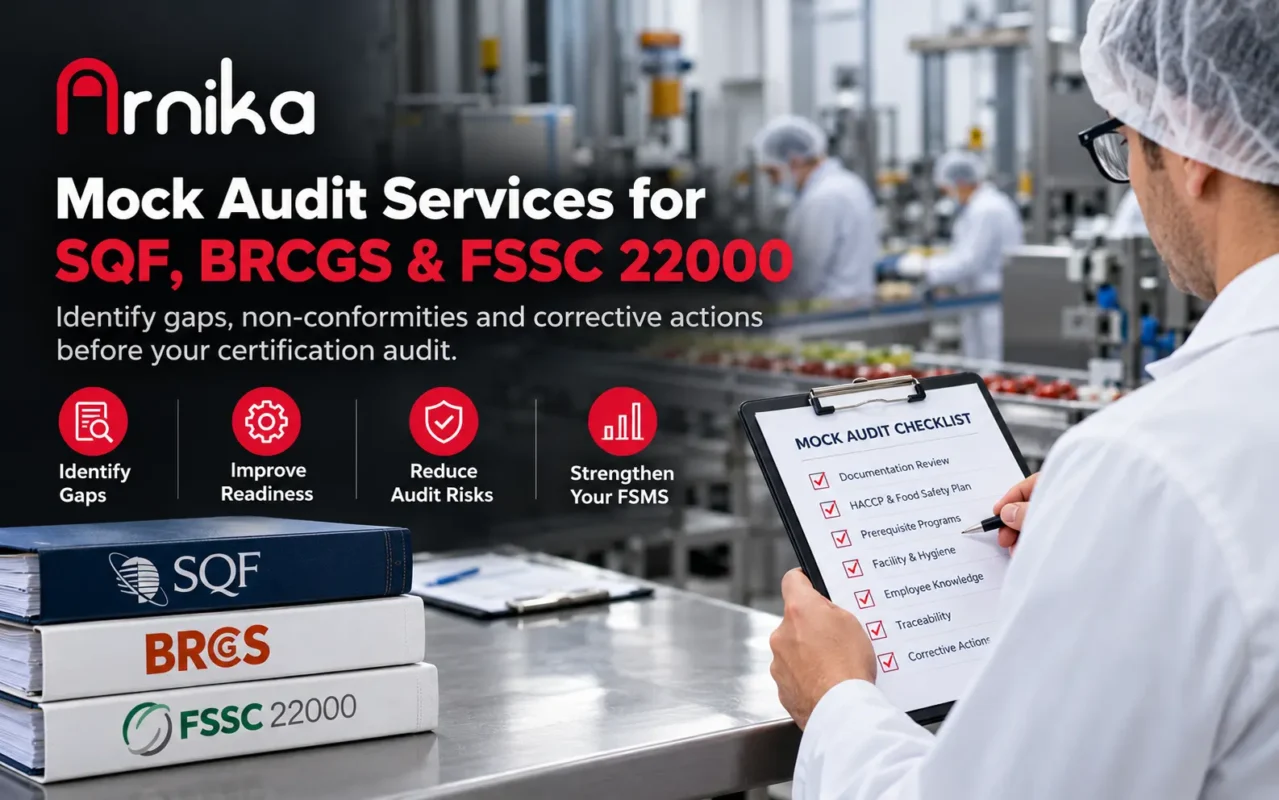
Preparing for a food safety certification audit can be challenging. A company may have strong procedures and an established Food Safety Management System (FSMS), but still discover gaps when an independent auditor examines documentation, implementation, employee practices, records, and facility conditions.
A mock audit provides an opportunity to identify and correct those gaps before the actual certification, surveillance, or recertification audit.
Arnika provides mock audit services for SQF, BRCGS, and FSSC 22000 to help food businesses evaluate their readiness, identify potential non-conformities, and prioritize corrective actions before the certification body arrives.
The objective is simple:
Find the problems before the certification auditor does.
Reviewed by Reza Eslami, CEO & Co-Founder of Arnika, with more than 25 years of experience in food safety, quality, HACCP, GMP, SFCR and certification readiness.
What Is a Mock Audit?
A mock audit is a structured assessment designed to simulate the experience of an actual certification audit.
Instead of waiting for the certification auditor to identify weaknesses, a mock audit allows your organization to proactively examine:
- Documentation
- Food safety procedures
- Records
- Employee knowledge
- Facility conditions
- Hygiene and sanitation
- HACCP implementation
- Prerequisite Programs
- Operational controls
- Traceability
- Corrective actions
- Internal audit effectiveness
- Food safety culture
- Compliance with applicable scheme requirements
The assessment is performed against the requirements relevant to your selected certification scheme and scope.
A mock audit is not the official certification audit and does not result in certification.
For SQF, official certification audits are conducted by SQFI-licensed certification bodies.
Similarly, BRCGS certification audits are conducted through BRCGS-approved certification bodies rather than independent consultants.
For FSSC 22000, certification audits are conducted by FSSC-licensed certification bodies.
Why Conduct a Mock Audit Before Certification?
A certification audit can expose weaknesses that may have been overlooked internally.
A mock audit creates a controlled opportunity to identify those weaknesses before they affect your certification outcome.
Identify Potential Non-Conformities
The mock audit can identify areas where your system, documentation, implementation, or facility practices may not meet applicable requirements.
Prioritize Corrective Actions
Not every gap has the same level of importance.
A mock audit helps management determine which findings should be addressed first.
Test Your Food Safety System
A food safety system is not effective simply because procedures exist.
Employees must understand the procedures, records must demonstrate implementation, and operational practices must match documented requirements.
Prepare Employees for Auditor Interviews
Auditors may interview employees at different levels of the organization.
Mock audits can help employees understand:
- Their food safety responsibilities
- Relevant procedures
- What records they complete
- What to do when something goes wrong
- How corrective actions are handled
Evaluate Facility Readiness
A certification audit is not limited to documentation.
The physical facility, equipment, hygiene, sanitation, storage, production areas, and employee practices may all be examined.
Reduce Last-Minute Surprises
The closer you get to the certification audit, the more expensive and stressful major corrections can become.
A mock audit gives management time to act.
What Does a Mock Audit Include?
The exact scope depends on the certification scheme, facility, products, processes, and certification scope.
A typical mock audit may include several components.
Documentation Review
The auditor reviews relevant documentation to determine whether the required food safety system has been established.
Depending on the scheme, this may include:
- Food safety policies
- HACCP plans
- Hazard analysis
- Prerequisite Programs
- GMP procedures
- Sanitation procedures
- Allergen control
- Supplier approval
- Traceability
- Recall procedures
- Environmental monitoring
- Food safety objectives
- Training procedures
- Internal audit procedures
- Corrective action procedures
- Verification records
Our HACCP consulting services can help businesses establish and strengthen the underlying food safety system.
Facility Inspection
A mock audit should examine the facility from an auditor’s perspective.
Depending on the operation, this may include:
- Receiving areas
- Raw material storage
- Production areas
- Processing equipment
- Packaging areas
- Finished product storage
- Employee facilities
- Handwashing stations
- Sanitation areas
- Chemical storage
- Waste areas
- Maintenance areas
- Transportation interfaces
The objective is to identify conditions that could result in food safety risks or audit findings.
Employee Interviews
Employees are an important part of any food safety system.
During a mock audit, employees may be asked questions about:
- Personal hygiene
- Handwashing
- Allergen controls
- CCPs
- Monitoring
- Corrective actions
- Product hold procedures
- Traceability
- Cleaning
- Reporting food safety issues
- Their specific responsibilities
The goal is not to teach employees scripted answers.
The goal is to determine whether employees genuinely understand the food safety system.
Record Review
Records provide evidence that procedures are actually being implemented.
Depending on the operation, the review may include:
- CCP monitoring
- Temperature records
- Sanitation records
- Pre-operational inspections
- Corrective actions
- Calibration records
- Maintenance records
- Pest control records
- Allergen verification
- Environmental monitoring
- Training records
- Supplier records
- Traceability exercises
- Recall exercises
- Internal audits
HACCP and Food Safety System Review
The mock audit should assess whether the documented food safety system is properly implemented.
This may include reviewing:
- Hazard analysis
- Control measures
- CCPs
- Critical limits
- Monitoring
- Verification
- Validation
- Corrective actions
- Records
A HACCP plan should not simply exist in a binder. The mock audit should determine whether the system is functioning in the actual operation.
Prerequisite Program Review
Prerequisite Programs provide the foundation for an effective food safety system.
The assessment may include:
- Personal hygiene
- Cleaning and sanitation
- Pest control
- Equipment maintenance
- Water quality
- Waste management
- Chemical control
- Supplier controls
- Allergen management
- Storage
- Transportation
- Employee training
See Arnika’s HACCP Prerequisite Programs pillar for more information.
Internal Audit Effectiveness
A strong certification system should identify problems internally before an external auditor finds them.
The mock audit can evaluate whether your internal audit process is:
- Complete
- Objective
- Risk-based
- Properly documented
- Followed by corrective actions
- Verified for effectiveness
If your internal audit program repeatedly reports “no findings” while significant issues exist in the facility, that may indicate a weakness in the audit process itself.
SQF Mock Audit
Prepare for Your SQF Certification Audit
Arnika’s SQF mock audit service is designed to help food businesses evaluate readiness before an official SQF audit.
SQFI describes the certification journey as including preparation for the audit, and its guidance emphasizes evaluating the scope of certification and preparing the SQF system before the audit.
Our SQF mock audit can examine relevant areas such as:
- SQF system documentation
- Food safety plans
- HACCP
- Prerequisite Programs
- Records
- Corrective actions
- Internal audits
- Employee knowledge
- Facility conditions
- Operational practices
- Traceability
- Recall readiness
The final assessment can help management prioritize actions before the certification audit.
SQFI states that official SQF audits are conducted by qualified auditors through SQFI-licensed certification bodies.
BRCGS Mock Audit
Prepare for Your BRCGS Food Safety Audit
A BRCGS mock audit helps businesses evaluate their readiness against the applicable BRCGS requirements before the certification audit.
BRCGS itself recommends using self-assessment against the applicable Standard as part of preparing for certification.
Arnika’s mock audit can provide an additional independent assessment of:
- Site standards
- Food safety systems
- HACCP
- Prerequisite Programs
- Product safety
- Process controls
- Personnel practices
- Documentation
- Records
- Traceability
- Internal audits
- Corrective actions
- Food safety culture
The objective is to identify potential weaknesses before the official audit.
BRCGS certification itself is performed through BRCGS-approved certification bodies; an independent consultant does not issue a BRCGS certificate.
FSSC 22000 Mock Audit
Prepare for Your FSSC 22000 Certification Audit
A FSSC 22000 mock audit evaluates the organization’s Food Safety Management System against the applicable FSSC 22000 requirements.
FSSC 22000 combines ISO 22000 requirements with applicable sector-specific prerequisite program requirements and additional FSSC requirements.
A mock audit may therefore examine:
- Food Safety Management System
- Context and organizational processes
- Hazard analysis
- HACCP principles
- PRPs
- Operational controls
- Verification
- Internal audits
- Management review
- Corrective actions
- Food safety objectives
- Traceability
- Emergency preparedness
- Food safety culture
- Additional FSSC requirements
FSSC currently identifies self-assessment and external expert support as possible ways organizations can prepare for their certification audit.
What Happens During an Arnika Mock Audit?
Step 1: Understand Your Certification Scope
We first understand:
- Certification scheme
- Site activities
- Products
- Processes
- Facility
- Certification scope
- Current food safety system
- Upcoming audit type
This ensures the assessment is relevant to your operation.
Step 2: Review Available Documentation
Relevant documents are reviewed before or during the mock audit.
The objective is to identify documentation gaps before they become audit findings.
Step 3: Conduct the On-Site Assessment
Where applicable, the assessment examines the facility and actual operational practices.
This includes observing whether employees and processes follow the documented system.
Step 4: Interview Employees
Employees may be interviewed to determine whether they understand their responsibilities and the food safety controls relevant to their jobs.
Step 5: Review Records
Records are examined to determine whether the system is being consistently implemented.
Step 6: Identify Findings
Potential gaps are documented and categorized according to their significance and the applicable requirements.
Step 7: Develop Corrective Action Priorities
The goal is not simply to produce a long list of findings.
The goal is to help management understand:
What needs to be fixed?
How important is it?
Who should address it?
What evidence will demonstrate that it has been corrected?
Mock Audit vs Internal Audit
These two activities are related but not identical.
Internal Audit
An internal audit is part of the organization’s own management system and should provide independent evaluation of the system.
Mock Audit
A mock audit is specifically designed to simulate an external certification audit and identify readiness gaps before the actual audit.
Both can be valuable.
A strong organization should not rely on a mock audit as a replacement for its internal audit program.
Mock Audit vs Certification Audit
A mock audit is not certification.
Mock Audit | Certification Audit |
Readiness assessment | Formal certification assessment |
Usually conducted by a consultant or internal team | Conducted by an authorized certification body |
Identifies potential gaps | Determines conformity for certification |
Helps prepare the organization | Used for certification decision |
No certificate issued | Certificate may be issued if requirements are met |
For example, SQFI states that its licensed certification bodies conduct SQF audits and issue SQF certificates. BRCGS likewise requires certification through approved certification bodies.
When Should You Conduct a Mock Audit?
The ideal timing depends on the maturity of your system and the type of audit approaching.
A mock audit may be particularly useful:
Before Initial Certification
To identify major gaps before the first certification audit.
Before Recertification
To confirm that the system remains effective.
Before a Surveillance Audit
To identify changes or weaknesses since the previous audit.
After Major Changes
For example:
- New facility
- New production line
- New products
- Major equipment changes
- New processes
- Organizational changes
- Significant corrective actions
After a Poor Audit Result
A mock audit can help determine whether previous findings have been effectively addressed.
Common Problems Found During Mock Audits
Many organizations focus heavily on documentation but overlook implementation.
Common areas of concern can include:
- Procedures not matching actual practices
- Incomplete records
- Employees unable to explain procedures
- Inadequate corrective actions
- Poor verification
- Weak internal audits
- Inconsistent sanitation
- Allergen cross-contact risks
- Inadequate traceability
- Incomplete supplier documentation
- Unresolved maintenance issues
- Inadequate calibration
- Poor housekeeping
- Incomplete training records
- Weak food safety culture
The exact findings will vary by facility and certification scheme.
Corrective Action After a Mock Audit
Identifying a problem is only the first step.
A strong corrective action process should consider:
Immediate Correction
What needs to be corrected now?
Root Cause
Why did the problem occur?
Our Root Cause Analysis in Food Manufacturing guide explains how to move beyond treating symptoms.
Corrective Action
What action will prevent recurrence?
Verification
How will you confirm that the corrective action was effective?
Documentation
What evidence demonstrates that the issue has been properly addressed?
How Arnika Helps Prepare Your Facility
Arnika’s mock audit approach combines document review with practical evaluation of the food manufacturing operation.
Our assessment can connect:
Documentation → Implementation → Employee Knowledge → Records → Facility Conditions → Corrective Actions
This helps identify situations where the written system looks compliant but implementation may not be consistent.
Arnika’s broader food safety auditing services can also support organizations that need independent assessment of their food safety systems.
Who Should Consider a Mock Audit?
Mock audit services may be useful for:
- Food manufacturers
- Food processors
- Packaging operations
- Warehouses
- Food distributors
- Private-label manufacturers
- Suppliers
- Export-oriented food businesses
- Companies preparing for GFSI certification
- Companies preparing for recertification
- Facilities recovering from significant audit findings
If your customers require a GFSI-recognized certification, our GFSI certification guide provides additional information about the broader certification landscape.
Why Choose Arnika for Mock Audit Services?
A mock audit should be more than a checklist exercise.
The value comes from understanding how requirements apply to the actual food manufacturing operation.
Arnika brings practical experience in:
- HACCP
- GMP
- SFCR
- Prerequisite Programs
- GFSI systems
- SQF
- BRCGS
- FSSC 22000
- Food safety auditing
- Food manufacturing
- Root cause analysis
- Corrective actions
- Regulatory compliance
Our approach focuses on helping organizations understand where the risks and gaps are and what should be done next.
Prepare Before the Auditor Arrives
Waiting for the certification auditor to discover a problem is one of the most expensive ways to find a problem.
A mock audit gives your organization an opportunity to identify weaknesses while there is still time to correct them.
Whether you are preparing for SQF, BRCGS, or FSSC 22000, Arnika can help evaluate your readiness and prioritize corrective actions before the official audit.
Need help preparing for your certification audit?
Contact Arnika’s Food Safety Consulting Team to discuss your facility, certification scheme, and upcoming audit.
FAQs — Mock Audit Services
What is a mock audit?
A mock audit is a readiness assessment designed to simulate an external certification audit. It identifies potential gaps in documentation, implementation, facility practices, employee knowledge, records, and food safety controls before the actual audit.
What is an SQF mock audit?
An SQF mock audit evaluates a facility’s readiness against the applicable SQF requirements before an official SQF certification, surveillance, or recertification audit.
What is a BRCGS mock audit?
A BRCGS mock audit assesses a facility against the applicable BRCGS requirements and helps identify potential non-conformities before the official certification audit.
What is an FSSC 22000 mock audit?
An FSSC 22000 mock audit evaluates the organization’s Food Safety Management System against applicable FSSC 22000 requirements, including relevant ISO 22000, PRP, and additional requirements.
Does a mock audit provide certification?
No. A mock audit is a readiness assessment and does not provide SQF, BRCGS, FSSC 22000, or other certification.
Certification is conducted by the appropriate authorized certification body.
How long before certification should we conduct a mock audit?
There is no single ideal timeframe for every facility. In general, it is better to conduct the assessment early enough that the organization has sufficient time to address significant findings and verify corrective actions before the certification audit.
Can a mock audit be conducted before recertification?
Yes. A mock audit can be used to evaluate whether the food safety system remains effective before a surveillance or recertification audit.
Does Arnika help with corrective actions after a mock audit?
Yes. Depending on the engagement, Arnika can help organizations understand findings, investigate root causes, develop corrective actions, and verify that improvements address the underlying issues.
Can a mock audit identify food safety system gaps?
Yes. A properly scoped mock audit can identify potential gaps involving documentation, implementation, employee practices, records, facility conditions, HACCP, prerequisite programs, corrective actions, and other applicable requirements.
Can Arnika conduct mock audits for multiple certification schemes?
Yes. Arnika can provide mock audit services covering SQF, BRCGS, and FSSC 22000, subject to the specific scope, scheme requirements, facility, and engagement.