What Does HACCP Stand For? Meaning, Principles, and Food Safety in Canada
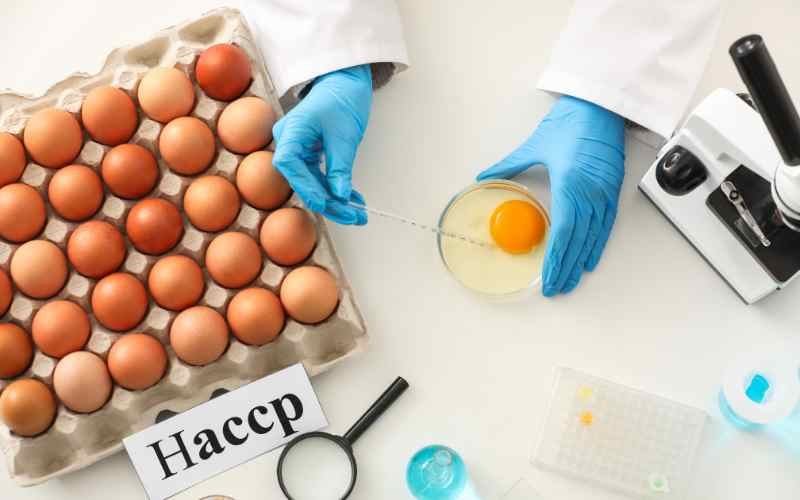
HACCP stands for Hazard Analysis and Critical Control Points, a preventive food safety system used worldwide, including Canada. In today’s global food supply chain, food can travel thousands of kilometres before reaching consumers—making food safety more critical than ever.
You’ve probably heard of HACCP, but what does HACCP stand for, and why is it so important in the food industry? This guide explains the HACCP definition, its principles, and its role in protecting food safety, with a focus on Canadian requirements.
What Does HACCP Stand For?
HACCP stands for:
Hazard
Analysis
Critical
Control
Points
It is a preventive food safety system designed to identify, evaluate, and control biological, chemical, and physical hazards throughout the food production process.
HACCP Definition in Food Safety
The HACCP definition refers to a structured, science-based approach to food safety. Instead of relying solely on finished-product testing, HACCP focuses on preventing hazards before they occur.
In Canada, HACCP principles are recognized by the Canadian Food Inspection Agency (CFIA) and form the foundation of Preventive Control Plans (PCPs) under the Safe Food for Canadians Regulations (SFCR).
Importance of the HACCP Food Safety System
Understanding what HACCP stands for is essential because it is the backbone of many food safety management systems (FSMS). HACCP helps food businesses:
Prevent foodborne illnesses
Meet CFIA and international food safety requirements
Reduce recalls and product losses
Improve consumer confidence
Support certification schemes such as SQF, BRCGS, and FSSC 22000
Internationally, HACCP is supported by organizations such as the World Health Organization (WHO) and the Codex Alimentarius Commission.
HACCP Meaning in the Food Industry
The HACCP meaning in the food industry goes beyond compliance—it represents a culture of food safety. By identifying critical control points, companies can actively manage risks rather than reacting to problems after they occur.
HACCP is widely applied in:
Meat and poultry processing
Seafood production
Dairy and cheese manufacturing
Food packaging facilities
Ready-to-eat and food service operations
The 7 Principles of HACCP
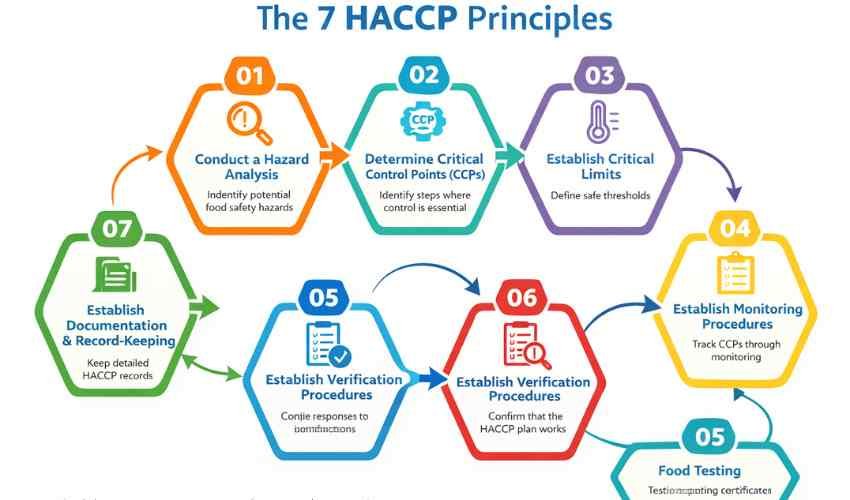
To fully understand the HACCP definition, it’s important to know the HACCP 7 principles, which form the core of the system:
Conduct a Hazard Analysis – Identify potential food safety hazards.
Determine Critical Control Points (CCPs) – Identify steps where control is essential.
Effective implementation of HACCP requires proper HACCP training for employees at all levels. Trained staff are better equipped to:
Identify and assess hazards
Monitor critical control points
Maintain accurate documentation
Respond quickly to deviations and food safety risks
In Canada, HACCP training supports compliance with CFIA expectations and helps businesses demonstrate due diligence.
HACCP vs Traditional Food Safety Methods
Traditional food safety approaches often rely on testing the final product. HACCPtakes a proactive approach by embedding food safety controls into every step of the process—from raw material receiving to final distribution.
This preventive method makes HACCP more reliable, cost-effective, and aligned with modern food safety regulations.
Conclusion
So, what does HACCP stand for? It stands for Hazard Analysis and Critical Control Points—a globally recognized food safety system that protects consumers and businesses alike.
In Canada, understanding and applying HACCP principles is essential for regulatory compliance, certification, and maintaining a strong food safety culture. Whether you work in food manufacturing, processing, or food service, HACCP knowledge is a must.
FAQs About HACCP
What does HACCP stand for?
HACCP stands for Hazard Analysis and Critical Control Points, a preventive food safety system.
Is HACCP mandatory in Canada?
HACCP itself is not always mandatory, but its principles are required under the CFIA’s Preventive Control Plans for many food businesses.
Who needs HACCP training?
Food handlers, supervisors, quality assurance staff, and managers involved in food production should receive HACCP training.
What industries use HACCP?
Food manufacturing, meat and seafood processing, dairy, packaging, and food service operations.
How is HACCP different from traditional food safety checks?
HACCP focuses on preventing hazards during production, while traditional methods rely mainly on final product testing.